

Read the transcript
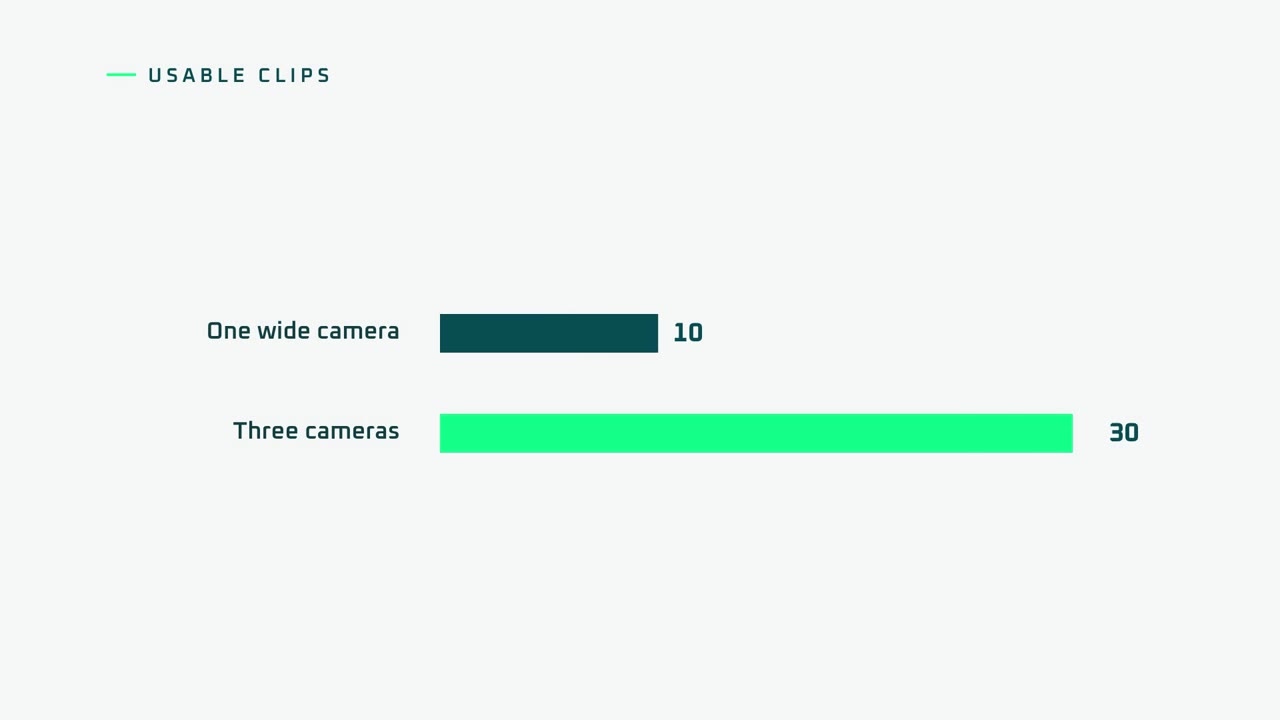
One camera or three? A single camera records a conversation. Three cameras record a programme. With one wide shot, after about four minutes the viewer has seen everything the frame will ever do, and every edit shows as a jump. Three cameras change that. You catch the listener's face, which is often the best moment. You can cut a rambling minute and nobody sees the join. And for vertical clips, a tight 4K camera gives you a clean frame of the speaker at full quality. It's the difference between 10 usable clips and 30. Our podcast room runs three 4K cameras: a wide, and a tight on each seat, each one recorded. One camera is enough for audio-first shows and solo pieces to camera. If clips are the point, three is the answer. Granary Digital. A working studio since 2005.
What one camera gives you
One wide shot of two people talking. It is honest and it is cheap, and after four minutes the viewer has seen everything the frame will ever do. Every edit is visible as a jump, so the conversation has to run uncut or be covered with graphics.
What three cameras change
- Reactions. The best moment in most conversations is the listener's face, not the speaker's. A tight camera on each side of the table catches it.
- Invisible edits. Cut from the wide to a tight and a removed rambling minute disappears. Nobody sees the join. This is why produced episodes can be tightened without feeling cut.
- Clips. A vertical clip needs a single face filling the frame. From one wide camera you crop and lose resolution; from a tight 4K camera you have a clean vertical frame of the speaker at full quality. It is the difference between ten usable clips and thirty.
How we run it
Three 4K cameras in the 4.5m by 4.5m room: a wide covering the table and a tight on each seat, each recorded individually so the editor has every angle for every second. The engineer keeps framing and focus honest while you talk. Panels of three or four use the same rig with the tights reframed.
When one camera is enough
Audio-first shows that publish a static video for YouTube, solo recordings to camera, and anything where the budget is better spent on more episodes than on more angles. The Solo hourly rate covers that. If clips are the point, three is the answer.
Multi-camera is standard on the Classic package at £395+VAT per episode. What else is in it is in what is in a produced episode.
Related guides
- The Podcast Studio: hire the room
- Produced podcasts
- What is in a produced episode
- Recording a remote guest properly
- The finished-hour maths for audiobooks
Ready when you are
Availability and a firm quote, usually same day. No pressure, no hard sell.
Questions we get asked
How many cameras does the podcast studio have?
Three 4K cameras: a wide on the table and a tight on each side, recorded individually.
Do I need multi-camera for a podcast?
If you want short vertical clips from the recording, yes: a tight 4K camera on each speaker is what makes thirty clean clips possible. Audio-first shows can use one camera.
granary.digital · 01243 884993 · studio@granary.digital · The Old Grainstore, Adsdean, Chichester, West Sussex, PO18 9DN · Prices exclude VAT unless marked inc VAT