

Read the transcript
What does a gaffer do? A gaffer is the head of the lighting and electrical department on a shoot. The director of photography decides how the image should look. The gaffer makes the lights achieve it, safely, on schedule, and within the power available. All day, that means calculating power, rigging lamps at height, balancing colour temperatures so faces match between shots, and running the dimmers. Gaffer tape? Named after the same person. It isn't duct tape. It's matte, and it comes off without leaving residue. Does a small shoot need one? A one-presenter video on a pre-lit stage doesn't. A music video with colour washes and haze does. Here, a gaffer is from 450 pounds a day plus VAT. Granary Digital. A working studio since 2005.
Most gaffers learn a room. Ours specified it.
James Jones has run this studio since 2005, and the lighting grid you would be lit on is the one he designed and rigged: eight bars at 4.5 metres, 42 channels of dimming, and two full DMX universes for anything a production brings with it. Nothing on that grid is a surprise to him, because he put it there.
That is the practical difference when you book lighting here rather than a gaffer and a bare room. There is no survey hour, no working out what the house rig will and will not do, and no discovering at four o’clock that the circuit will not take another fixture. The rig is known, the power is known, and the day starts with lighting rather than with reconnaissance.
What does a gaffer do?
A gaffer is the head of the lighting and electrical department on a film or photo shoot. The director of photography decides how the image should look; the gaffer makes the lights achieve it, safely, on schedule and within the power available. On a small production the gaffer is often the entire lighting team.
The word probably comes from the long 'gaff' pole once used to adjust overhead fittings, and the job is as old as filmed light. Below: the roles around the gaffer, what one does all day, and which a small shoot actually needs.
The department, in order
- Director of photography (DoP). Designs the photography: lighting, lensing, camera movement. From £575/day +VAT.
- Gaffer. Executes the lighting plan, runs the department, owns electrical safety. From £450/day +VAT.
- Best boy. The gaffer's second: logistics, kit, paperwork, power distribution. Larger productions only.
- Spark. The lighting electrician who rigs, cables and operates fixtures. From £350/day +VAT.
What a gaffer actually does all day
Reads the lighting plan and the location. Calculates power and distributes it without tripping anything. Rigs fixtures safely at height, here from an 8-bar grid 4.5m up. Balances colour temperatures so faces match between shots. Patches dimmers, ours run 42 channels of dimming, and runs colour cues live for anything with gel washes. Then de-rigs it all so the next production finds a clean grid.
Which roles does a small shoot need?
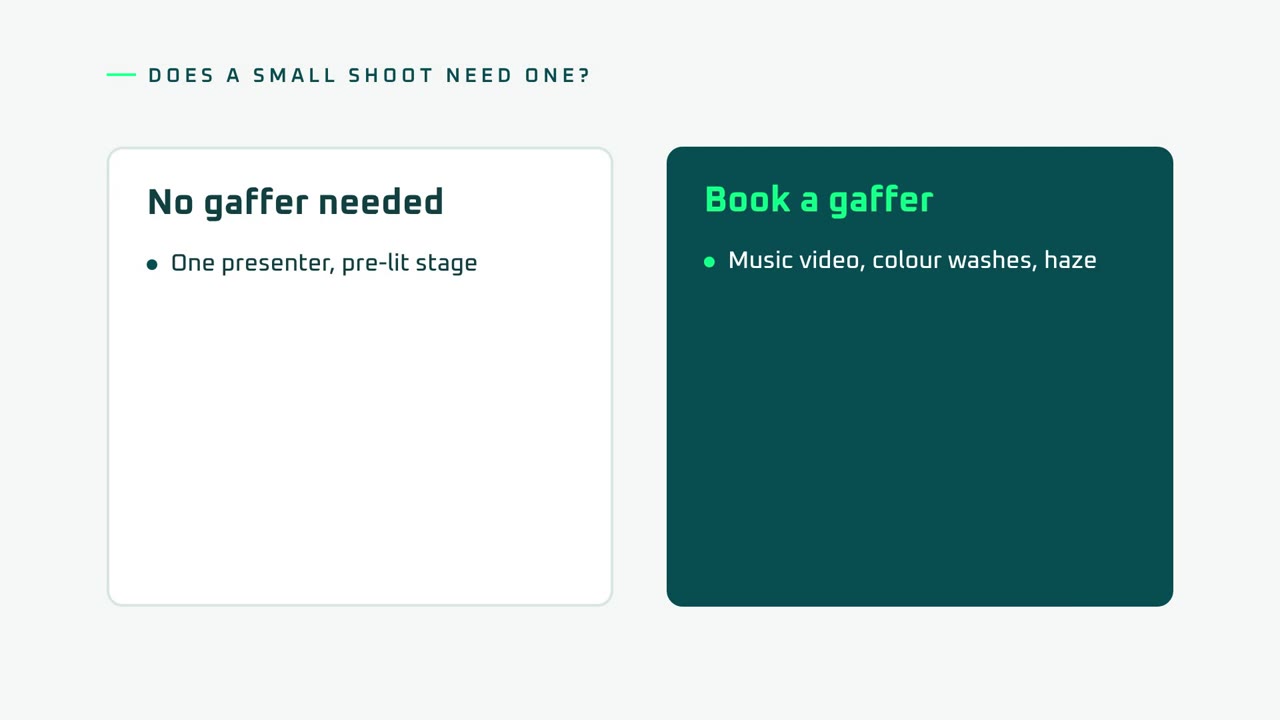
A one-presenter corporate video on a pre-lit stage: none, the stage is the gaffer. An interview shoot with two setups: an operator who can light, or a DoP-gaffer hybrid. A music video with colour washes and haze: a gaffer, no argument. Drama: a gaffer and at least one spark. If in doubt, send the shot list and we will say which it needs, not which we would like to sell.
Why is it called a gaffer?
Two explanations compete. The tidier one: in early theatre and film, the person adjusting the overhead lights used a long pole with a hook on it, a gaff, to open and close the flaps on the fixtures. The other: gaffer was already an old English term for the head man of a work crew, a contraction of godfather, used on farms and building sites long before anyone pointed a camera at anything. Both are plausible and nobody can settle it. The lighting-pole story is the one you will hear on set.
Gaffer tape takes its name from the same person, because it is the tape the gaffer used to secure cable runs. It is not the same thing as duct tape: it is matte so it does not catch the light, and it is designed to come off a floor or a fixture without leaving residue.
Gaffer vs rigging gaffer
On a bigger production the two are separate jobs. The rigging gaffer works ahead of the shoot: they and a rigging crew get the fixtures hung, the power distributed and the cable run before the camera crew arrive, so the shooting day starts with the room already prepared. The shooting gaffer is the one on the floor during takes, working next to the DoP, adjusting and cueing.
On the scale of shoot most people are actually booking, one person does both. You will only need a separate rigging gaffer if there is a large rig going in the day before.
What a gaffer brings, and what the studio already has
A freelance gaffer usually turns up with knowledge rather than a lorry: they know how to get a look out of whatever is on the grid. Some own a small van kit, others expect the production or the studio to supply fixtures. Ask before you book, because it changes the budget.
Here, the room supplies a good deal of it: an 8-bar grid at 4.5m, 42 channels of dimming under DMX, house incandescent and LED, C-stands, flags, bounce and apple boxes, plus a low fogger and a fan for haze and movement. A gaffer walking into this room is not starting from nothing, which is why a lighting day here costs less than the same day in an empty warehouse.
Ready when you are
Availability and a firm quote, usually same day. No pressure, no hard sell.
What does a gaffer cost in the UK?
Indicative day rates, all +VAT: a spark from £350, a gaffer from £450, a director of photography from £575. Rates rise with experience, with the size of the rig, and with overtime past a ten-hour day. Commercials and drama pay more than corporate. Rates outside London are generally lower than inside it, which is most of the reason productions travel to a studio like this one.
Two things that catch people out when budgeting: prep and de-rig are working time, and a big rig may need a separate day either side of the shoot; and kit hire is quoted separately from the person, unless the gaffer is an owner-operator with their own package.
How to hire a gaffer
Send three things and any competent gaffer can tell you what the job needs: the shot list or treatment, the location or stage, and the shoot dates. If you have a reference image of the look you want, send that too, it saves an hour of conversation. From there you will get back a crew recommendation, a kit list and a number.
If you are shooting here, we book the lighting crew for you through the studio, so it is one contact and one invoice rather than three.
Ready when you are
Availability and a firm quote, usually same day. No pressure, no hard sell.
Questions we get asked
What does a gaffer do?
A gaffer is the head of the lighting and electrical department on a film or photo shoot. They turn the director of photography's plan into safe, working light, on schedule and within the available power.
What is the difference between a gaffer and a spark?
A spark is a lighting electrician who rigs and operates fixtures. The gaffer runs the whole lighting department and is responsible for the plan and for electrical safety; the spark works under the gaffer.
What does a gaffer earn per day?
In the UK, gaffers typically run from around £450 a day, sparks from around £350 and a director of photography from around £575, plus VAT and kit.
Why is it called a gaffer?
The name probably comes from the long 'gaff' pole once used to adjust overhead lights and rigging on early film sets.
What is a gaffer?
The gaffer is the head of the lighting department on a film or television set. They take the director of photography's plan for how a scene should look and make it physically happen: which fixtures, where, on what power, and safely.
What is a rigging gaffer?
A rigging gaffer works ahead of the shoot, hanging fixtures and distributing power before the camera crew arrive, so the shooting day starts with the room ready. On smaller productions the shooting gaffer does this themselves.
granary.digital · 01243 884993 · studio@granary.digital · The Old Grainstore, Adsdean, Chichester, West Sussex, PO18 9DN · Prices exclude VAT unless marked inc VAT