

Read the transcript
How do you plan a studio shoot? Start with three decisions. What's the deliverable? Who appears in it? And where will it be seen? Then write the shot list before you price the day. It's the only honest way to know whether you need four hours or two days. The week before, send the shot list to the studio, stagger the crew calls so the gaffer arrives before the talent, and check wardrobe against the background. Green clothes on a green screen keeps happening. Three things blow studio days: indecision on the floor, tired talent, and underestimating resets. Presenters are good for about four focused hours, so shoot the important material first. And after the wrap, get the footage off the cards twice, onto two drives, before anyone leaves. Granary Digital. A working studio since 2005.
Before you book anything
Three decisions shape everything else. What is the deliverable: a 30-second ad, eight training videos, a lookbook? Who appears in it, and are they confident on camera? And where will it be seen, because a cinema spot and an Instagram reel are lit, framed and paced differently.
Write the shot list before you price the day. A shot list is the only honest way to know whether you need four hours or two days. If you cannot write one yet, you need a director before you need a studio.
Booking the right space
Clean background photography and built sets want an infinity cove. Presenter-to-camera with graphics behind wants a green screen. Conversation formats want a treated audio room. If you are unsure, describe the deliverable to the studio and let them recommend; it is in their interest that you book the right room, because rebookings from wrong rooms help nobody.
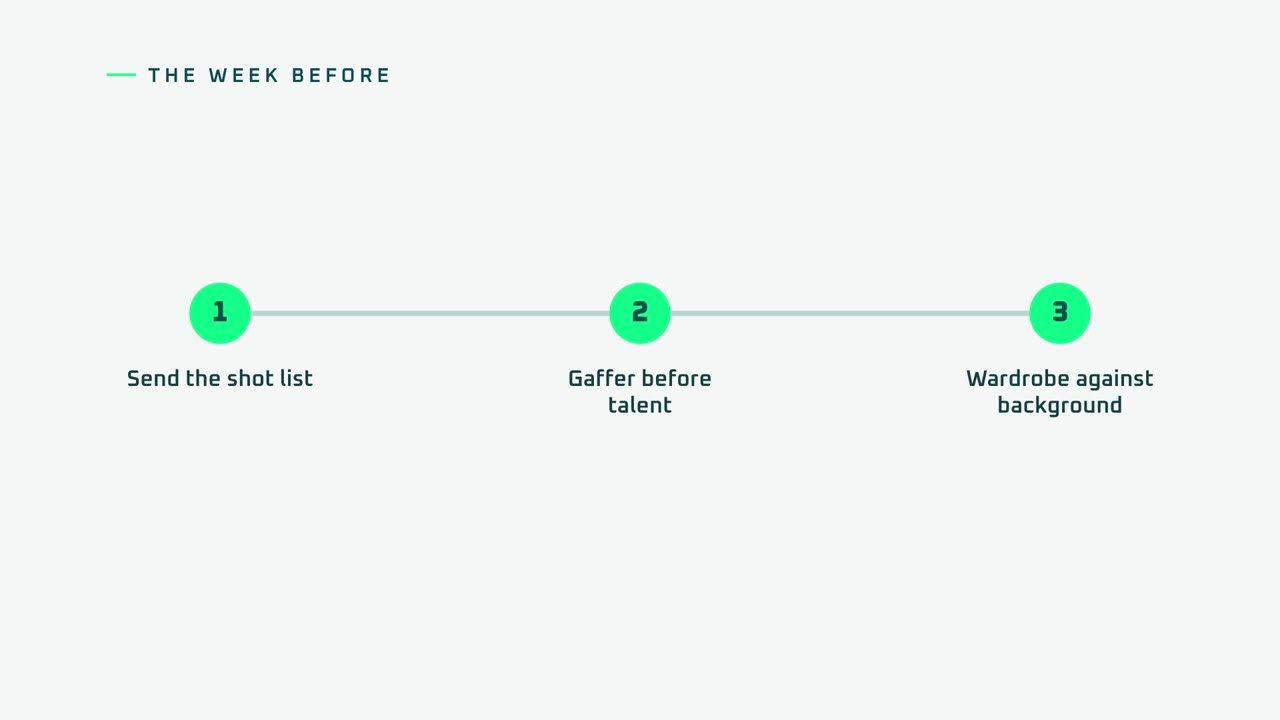
The week before
- Send the shot list and schedule to the studio. Good studios will flag problems for free.
- Confirm crew call times, and stagger them: the gaffer before the talent, always.
- Check wardrobe against the background. Green clothes on a green screen is a cliche because it keeps happening.
- Send scripts ahead if there is an autocue, on a stick or by email.
- Confirm parking and access for vehicles and kit. (Here: fifteen spaces, ground-level load-in.)
The three things that blow studio days
Indecision on the floor. The expensive place to make creative decisions is the studio. Make them in pre-production.
Talent fatigue. Presenters are good for about four focused hours. Schedule the important material first, not last.
Underestimating resets. Every lighting change, wardrobe change and set change costs minutes. Eight videos in a day is realistic on a pre-lit stage; on a stage you relight per setup, it is four.
After the wrap
Get the footage off the cards before anyone leaves, twice, on two drives. Agree the edit timeline while the shoot is fresh. And book the next session before you leave if this is recurring content, because the consistency is what compounds.
granary.digital · 01243 884993 · studio@granary.digital · The Old Grainstore, Adsdean, Chichester, West Sussex, PO18 9DN · Prices exclude VAT unless marked inc VAT